View Full Transcript
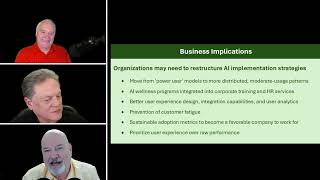
This is your cab, this is speaking. This is time on the way. Ask your best air seat belts. Please find yourself on the way. ATL, your best air seat belt. Take off. Hey, welcome everybody. This is another week of Morpheus Cyber Podcast and got Bill here, Gus with me also. So we're ready to jump right in. Our first topic today is going to really about something a little fun. I think a lot of people out there have Apple CarPlay in their car, so they should be able to relate to this segment and should be a fun one. So we find out now that Apple CarPlay is now integrating with ChatGPT. So, hey, I'm thrilled about that. All of us, I think, are thrilled about that. We love AI. It doesn't matter what flavor it is. ChatGPT just happens to be the flavor today, but hey, to be able to say, hey, give me, hey, listen here at ChatGPT, or I can say Siri, I guess in this case, because it's Siri interfaces with ChatGPT. So give me the directions to get to work and give me the weather for the day and while you're at it, start reading articles to me that I saw on YouTube earlier, something like that. And immediately ChatGPT takes over. So what do you guys think about that? Well, first of all, it's pretty much admitting that Apple lost the AI race, right? Because they're bringing in ChatGPT to fill in things that they couldn't do. And ChatGPT is most likely more than happy to participate. But guess what? No money changing hands in either direction, right? Because Apple is bringing in ChatGPT into their ecosystem that they've developed and spent many billions of dollars developing. And they have over 600 vehicles that they already have in their ecosystem. And this just brings ChatGPT right into all of those companies ecosystems. But no money is changing hands, like I said. And if you weren't, however, however, what do you think, Gus? They're gonna allow you to link your paid ChatGPT link up to it to get additional features. What are some of those features, do you know? The only one I would imagine, I know that the for free play, a few of me does not have, it doesn't remember from session to session. So if you say, hey, take me to the restaurant that I went to last night, you're out of luck. But here's my question. So we all use AI in the car, right? You slap it to the dashboard and you say, hey, take me here, take me there. I'm not sure, I'm not sure it changed for me. I'm not gonna do anything different with it. I don't want to be a bounty bummer. But yeah, I've got my phone sitting right there already. What's the diff? Can I think, I think the fact that they are now creating a more blended link of that technology might make it a lot easier to use than us using two separate, basically two separate, a system in your car that's attached to your stereo and you're and provides you with the ability to use the microphone for that for Siri. Because remember beforehand, if you've got car play, you just talk to Siri, right? But here's the problem I always hated about Siri. So I say, hey, Siri, find me this article on X. So it'll do that and I say, read it to me. You say, boom, can't do that, doesn't do it. One of the two reasons is thinks that it's a car safety issue sometimes and other times it just can't do it. I can't find the text or something, it doesn't read it. I never have that problem with chat GPT every time. I don't care what it is. It'll find it inside of embedded within YouTube or something and it'll read you out what that was all about. So it opens up a whole different usability capability that you don't get separately. And I like the car play features because you have your navigation integrated with it, you have your stereo integrated with it. So you get your music playing back and all those things and now you just have GPT as the... That's an upgrade. It's an upgrade. You're obviously right because about 80% of US car buyers say that having that feature just car play in general is part of their decision making when they look for a car. Well, Steven Barlett mentioned on diary of a CEO that we have maybe two years before AI fundamentally changes everything. And that includes how we interact with our cars. Wow, that's a powerful statement. Yeah, AI's just becoming the interface between humans and a system no matter what that system is. So we're just starting to see it become in the middle between any function out there. So whether it's your house controls, whether it's your car, whether it's your refrigerator, whatever it is, AI is gonna be in the middle of all of that. So that's why I think there's so much interest in how can we link and create a more invisible link between the two. So when you're just talking to GPT, you have access to everything. Yeah, it makes sense for you sub billionaires. The average age of the car on the street in the United States is 12 to 13 years old. So a lot of people are excluded from this. Yeah, you'd have to go buy a stereo for your vehicle, which I was considering that too. I actually, I actually, I have a car plate. If you have an external stereo. Yeah, I don't have car play now, so I'm gonna buy an external, I buy another replaceable unit for my stereo, my truck. Yeah, they make replaceable units, but it's a little pricey to put another one inside of my truck. I price it out, it was about $900 with everything that I need because I have a F-150 Lariat and the Lariat has all these other functions in it like onboard GPS and it's got the enhanced stereo package. All these things that need to be connected to it. When you get done buying all those modules to put everything together, it's $900 to do it. So am I gonna do it maybe because I love my truck. So we'll see, but I want car play. Your technical little, your average drove off the street. That's the big check. What you just said, that's over my head. Well, I just have a plug into my car sound system and it goes, I just get in my car and it automatically goes to the Bluetooth and it circles in my whole car. And I just turn on not car play, but I just use my Apple phone. And while I'm using my Apple phone, I can say and do anything that I want. Now, you're driving down the road and you've already said, hey Siri, take me here and it's boom. Car play is putting out on your screen. And then you can just say, hey, now book me a restaurant, book me a table. While you're at it, explain why my teenager is acting weird. Yeah. I think I was. I go analyze while you're driving down the road and you're gonna have a nice and long hand and your cars in the others. Yeah. If you have car play, the good thing is that if you have an iPhone, it only requires iPhone 11 or newer. So it's not like you have to run out and buy a brand new iPhone to work with this chat GPTAI capability. Whereas the AI capability built into the new phones, iPhones that Apple offers does require you to buy a new hardware. So I thought that was a really good move. Now, there's just using as a web interface that goes to chat GPT directly. So you don't have to buy some new hardware. So all you need is car play inside of your car and you're good to go. Yeah. Now, think about this. Tesla and their AI assistant is already processing over 50 million voice commands a month. So that's a good reason why Apple probably put this in is a competitive feature to people like Tesla. Yeah. And car play is already in about 600 different vehicle models right now. So that's a lot of different models that you so they already have car play enabled in them. So yeah, first I thought this was a move towards chat GPT becoming free. No charge item like what they were supposed to do in the first place. But the thing you thought about it, you get a free, you get a free version of it. Pretend hot in your crocker 24th, seven. It's great while you're in the car. We're all going to have our regular subscription. Obviously. Yeah. But that was a good point you made earlier about the fact if you don't have a account, a GPT account, then the things that you prodded for or ask it for information on doesn't get stored. So the next time it's like it has no memory of that amnesia, total amnesia about what you said yesterday, unless you have an account. Yeah. And that's total amnesia is to what you just said today. I think it must have some short term memory, right? At least while you're on that trip, it shouldn't have some memory we would hope. Now BMW and Mercedes and Audi have invested over 15 billion in proprietary AI assistant development for their vehicles. So obviously there's a lot of focus, a lot of research. There's going to be winners and there's going to be losers. And I think it's going to align with where your cars manufactured, what brand it is, and that sort of thing for what we end up using at the end of the day. But think about it. I have navigation system with DVDs and everything in my car and my car is a little bit older, but I have all these fancy features in it. And what do I use? I use my iPhone, right? I just pop it on the mag stand, gets charged, connects to the Bluetooth, and I've got every feature that you would have just about, including things like the GPT capabilities, just by default, right? It just doesn't appear on my car's video screen, which is really what car play does quite well. And that is, that's definitely convenient for sure. With Tesla owning, essentially, GROC, don't you think there's going to be some integration there coming directly into their Tesla vehicles pretty quick? They did just announced that they were going to enhance their AI assistant inside of their vehicles. You can see that might become a competitor down the road. Don't have to go by chat. You don't have to buy chat. You don't have to get car play and you don't need to use chat GBT. You can just, in your Tesla, now have GROC, which that's common. Yeah, I bet that's why they came out with it when they did to get ahead of Elon. GROC. GROC probably sure. GROC's coming. So they wanted to be a MeToo feature instead of Boom Shaka Laka. There you go. Speaking of GROC features, just as moving on to the next segment, GROC just has this new video thing and the video that it can do is phenomenal. You'll see some of that next week when we bring out the 84-year-old AI Renaissance Man feature that we just got finished recording here in Austin. You're going to love it, but you're going to see some of the work of GROC who took our image and put it all into video, which is spectacular. I used OpenAI to create the image for the thumbnail and then I gave that image over to GROC to create a little video and it was like, oh my God, the one to punch. But I used all these different AIs, right? I paste things into Microsoft Co-Pilot about how I want to do Teams integration. I paste that back over into Cloud Desktop and then Cloud Desktop talks to my Cloud Code and I'm using multiple AIs all the time. Not for competition, but because I have them perform oversight and advice with me. So I think we're going to live in a world of using multiple AIs and we're going to end up having some winners and losers. I think we're going to have probably three major AIs in the future. Well, it's smart to use multiple because AIs like having an assistant that gets 95% of everything right, but you still got to look at it. But if you have a cross-section of AI participating on it, I think that's going to increase the accuracy quite a bit. Now speaking of AI revolutionizing things, our next segment is all about AI revolutionizing medical rare disease treatment. And so if you take a look at this, we're talking about things like that 95% of rare, very rare diseases are diagnosable by looking at the person. So a lot of congenital things are, I guess, in facial features or certain features that are registered with what a person looks like or body image and that sort of thing. So you can take a picture. And the thing is that what they were talking about this area is that your family doctor may see one or two of these rare diseases in their entire career. Whereas when AI takes a look at this, they have hundreds or even thousands or tens of thousands of examples. And you can take, and sometimes it takes seven years before you're accurately diagnosed one of your children or something for one of these rare diseases. It takes sometimes seven years before you finally get a diagnosis, get to a doctor or a practitioner who really understands what's going on. AI can do that type of thing very expertly. And people who have never been able to get a diagnosis can give a picture to AI. And within a minute, get a diagnosis that was not possible for seven years with the standard medical facilities. So this is opening things up wide open for AI. It's not necessarily that AI is finding new things, new information. It's just that it has the ability to pattern match so well that it can review so many different types of conditions that a typical doctor, there's no way he can't sit in front of a monitor and go through all these different types of reports that have been written medical reports and all the different types of images that are out there under the different type of conditions. Like even more standard was a customer might. They had a lot of medical images of hearts, different heart conditions, how they look at different times so they could actually diagnose just from a picture. That's what AI is doing. It's just looking at all this stored imagery out there and saying, I see this person's face, I see this person's body, I see this photograph that they took of this thing that's happening to a person. Can I find anything that looks anything like it and it'll go through millions of images and find it in just a little bit of time? Hardly any time. So the thing that enables that is that 95% of all rare diseases are genetic ACE and for some reason I don't know the science behind it but that's the genetic illnesses is what they can see in the face and I think Bill, I think the average is seven years that and it's all children too that starts with. So half the time they're in high school by the time they figure it out and this is after misdiagnosis on average they go through about five doctors through the process and spend about $50,000 and this is going to be a big step in the right direction by speeding that process up and not only that they don't have to travel to specialized centers which for rare diseases, the definition of a rare disease in the United States is one that affects less than 200,000 people. Europe has different definitions of it. So there's not a lot of attention being paid to this because there's only, there's such a small amount of patience. So you have to travel a long way to go to specialty clinics and that just drains the dough, the financial, I want to say crap. Crap, other, third row. Now next week I haven't told the other hosts this yet but next week I'm going to be giving us all the results of taking gym and gusses pictures to find out what kind of defects they have. Medical grader, nice to meet you. A defect. All right, medical. Well that's cool. Thank you for doing that. That's awesome. See, AI is turning Bill into a doctor. Yeah. And that's true that now what AI was be doing is taking the general list. Okay. And even less than that, how often have you gone in and seen a nurse practitioner, not really a doctor? And there now when I was with with Kaiser from an NTA, they would do that routine on me all the time. I'd get some nurse practitioner coming in and try to basically be my doctor and I would go, where's my doctor? He's not available right. So what happens now is AI will take even that level of person make a much more intelligent because it's, they're going to say, well, I see all these things put that in. Here comes the pattern. Oh, this is probably what your issue is. So it's going to take it down stream of bunch. So I think people at a lower level will be able to diagnose more and provide better, better service to us and on the medical field. Now one of the issues that's a little bit sad is that only 5% of these rare diseases have an FDA approved treatment. So a lot of the treatments for these, you know, under a couple hundred thousand people who have it in the United States or what have you have a defined 5%. That's one in 20 who have an exact mitigation plan for their malady. And I don't know if that's going to, if this is going to help provide more rare disease FDA approved treatments, but I would imagine that. It's going to be tough. Yeah. This speeded up tremendously. So that's, remember, we talked about it last week or a week before, but what AI is doing is that when someone does apply, you know, for a new drug, in this case, it's repositioning a current drug that they figured out will work for this. That currently takes a long time. And AI actually, this process is taking place in 130 countries or something like that. So we're in it already. And that's going to shorten the time period needed to reposition or reallocate a drug that's going to work for this rare disease. We're in the past that took years and added to the reason why it takes a long. Yeah. This is huge. And not only that, go ahead. We're good. Rare disease AI startups have raised 2.8 billion in venture funding in 2024. So that was just like what a year and a half ago or so. So now we're going to see that AI startups are going to be focusing on providing solutions like this, which means there's going to be more solutions, more competition in the marketplace to meet and to work out those solutions. So hopefully we're looking at a world where AI is going to not only help us diagnose, but also help us mitigate the problems for people with these type of rare diseases. So it is AI that we are expecting to do great things by being able to do these patterning matches. But we couple that with quantum. And now we have an extreme capability. We talked about that. And the fact that China has now released a quantum system now that you can access, you can look at that episode. As we see it go forward, sure, having an AI capability to do all these things. Yeah, that's wonderful. But to be able to increase the speed at which it does these experiments and makes these different types of comparisons with a kind of quantum level is going to be fantastic. I think an interesting point is that this isn't going to put doctors out of jobs because that's the big fear, right? Because right now, no one's paying attention to these rare diseases. One off use case, really. And it's all just positive news, I think. Yeah, I think it also opens up a whole nother avenue of revenue for possibly the industry where they were not even touched these types of conditions because they were so hard to diagnose. And if AI can come and say, Hey, I think I found a diagnosis for it. This could be solved much quicker. All of a sudden, now these areas that were not being looked at and maybe consider to be a very narrow area of practice now become something they can actually produce results for and come profitable. So we don't always need to look at it from that angle, but very often that's what it takes for them to get interest to put their money toward that area. Oh, yeah. Fact is that they're quite go ahead, yes. The fact is that there are there are many of these rare diseases that have less than 100 instances worldwide. So yeah, to your point, Jim, nobody's throwing money at that. Right. Yeah, and some of these rare diseases have fewer than 10 specialists who specialize in that disease in the entire world. Yeah. Now, Peter is a man this who does the abundance and the moonshots had Kathy Wood on recently, or she pointed out that there was an IPO that was 12,000 times over subscribed. And it's because that was a money that was focused on AI drug discovery. And if it works, rare disease patients who waited seven years can now get one from a photo in minutes like we were talking about. So people are speaking about this. It is happening on a regular basis. So it's not just our podcast talking about this. There's a lot of other top podcasts discussing these topics as well. Great. Yeah, definitely people are using chat GPT to get a diagnosis. And it's been remarkably good. So I can see the future being where we all asked our AI, whatever one, whatever flavor we're using. And it's able to give us at least a pre-diagnosis that we can go in and talk to our doctor. I've already used it when my wife needed to go see her doctor and I looked at her conditions and I asked AI and said, it could be these things you should talk to your doctor about these things. And so I brought it up. They said, yeah, you're right on. That is correct. And it would probably be the treatment that we would go with. Yeah. The guys on the, yeah, the guys on the all-in podcast have brought up. That's the billionaire podcast. They're a little bit different. We're the sub billionaire podcast. But the all-in guys brought up that they were, people are uploading all of their medical information, their records, their blood work and that sort of thing to chat GPT and getting diagnostic leads that their doctors missed. Doctors can't spend the amount of time that an AI system can on your blood work over the last three years. So you had three sets of blood work over the last three years. You load that into chat GPT. It'll compare all of them. Starts talking to you, telling you and I've told you guys that I load in every drug that I take and every supplement that I take in and it basically condenses that little nutrition label that's on the back of everything. And even with recipes, if I'm making a special protein cookie or something of that nature, I put all the ingredients in and then all the nutritional values for that ingredient. And it comes up with an ingredient, nutritional and an ingredient tag just is on the store box of cookies or whatever. So you can use it for your nutrition. You can use it for your supplements, for your drugs, for interactions. And I'm not going to trust it when life and death is there. I'm going to talk to my doctor. But the doctors don't have enough time to focus on your specific records and your information like chat GPT or any of the other systems can today. Well, let's end with something a little more human. We're starting to see some things in the developer market where people are using tools to program with AI tools. And so real first times of burnout is happening now. People are starting to find that they have more of the acquiring by those in charge. And now you have an AI tools that are expected to turn out more. So they're starting to see that the developers are now experiencing burnout. And Bill, you're the one who knows a lot about using those tools. I'm just starting to learn cloud and you have a perspective on it as well. A little different perspectives. Why don't you talk about that? Yes. And I understand what they're saying. Here's the trouble with AI tools in my situation. I use cloud code all the time. I use code acts. I use a lot of them, including Groc and that sort of thing. So I've tried all of them. I use all of them. I've pretty much standardized on Opus 4.6 now, which just came out, which is a cloud code product. And here's the thing that hits me with burnout. I get so excited. I just put all my genealogy information into a database with pictures and stories. And now I can build stories about my great, great, great grandfather and how he came to California during the gold rush. And it looks up things like, oh my God, every place he lived when the census came out every 10 years. And so I have it on a map and it goes, but it tells a story of one of my ancestors. Over 150 years ago. So here's the issue. I get so excited about what AI is helping me do in cloud codes, by the way, very good of family history. And that I stay up all night. Why? Because I'm amazed every time I prompt it to go find something in the Library of Congress or in familysearch.org or what have you. And then I ask it to tell a story and build a map of where my family came from and each individual, oh my God, I'm staying up all night. Yes, I am having burnout because I'm so excited about what I'm capable of doing. And so it just, it leads to burnout because you don't sound burned out, Bill. I do have my days. I do have my nights and days get turned around. Is that when you snap? Is that when you snap at Jim and I? Yeah, I get excited and actually true. You do when you're sleep deprived, right? And then your nights and days turn around. And that is where my burnout comes from is that I'm just like so amazed. And it's what project do I want to do next? And I've got a hundred of them. Why? Because I can accomplish things that for my whole life as a technologist and a technical thinker, I've wanted to be able to do. And now it's possible. And I can develop these things in five or six hours. Yeah, and really is amazing, isn't it? Yeah. It really is amazing what you can do. I wanted you to give that perspective because that is the positive perspective I think even though it doesn't sound good that you're staying up all night. But it's such a good thing to create something. My wife thinks I'm crazy, right? Yeah, she does. She's wondering who this cloud character is, right? But the other side of the story is the developers. Now that is the other part of the story, which is now developers have got these tools. And those in charge are saying, now you should be able to do that in 10 minutes. What you should take you two hours, you can do in 10 minutes. So they have to admit in many cases, yeah, that's true. I can do it in less time. So now what they've done is not reduce the workload. They've added to the workloads. Why don't you have four or five agents do these things and have them all turn out within one hour what would have taken you eight hours to do? And so that sounds good at first, except for what's happening now. So they're just going to scratch at the pressure ups, what you're saying. Yeah, fatigue. What Bill's talking about how he stays up, follow that. A big part of that is prompting. You're prompting the AI. Here's what I want you to build. And it's the better prompt you are, the better results you get. And if you don't get it right, then you have to continually correct AI and then come back. And maybe in some cases say, all right, stop. We're going to start over and reprompt all over again because now you've learned what you really want to say in a better way. So that's where that happens. So there's a lot of that repetitions that goes on and on. And the other thing is optimization, optimization fatigue. So now you got the basic code out. Now we need to optimize. And that's what Bill said. I'm up to three in the morning because man, I created the basic code. And now, oh, I want to do this. I want to add this. And off you go. And you're just into a lot of time spent and eventually fatigue. I'm going to worry about the Super Bowl. I was at a party and there were eight of us. And there was a new couple at the party. And his name is Tim. And we started talking, found out he was a software developer, right? Lifetime software developer. And it was like the whole party became he and I talking about this cloud code because he's stuck on cloud code just like me. And there are so many technical coders who are getting in and finding out that within a couple of hours on this podcast, we have the tech futures index.com, right? I wrote that in two and a half hours. Now go look at it. Tech futures index.com. It's becoming quite popular and it's part of this podcast. If you can do something like that and build that whole environment in two and a half hours, imagine now it's just, okay, I'm stressed out because I don't know what I want to do next because there's a thousand things on my list. And then once I do one, then I want to optimize it. Oh, I'd like to add this feature or that feature. And yeah, that's where the burnout comes from. It's because a lifetime of desire to solve all these software problems has been pinned up and most of these software developers and then all of a sudden they figure out, hey, within an hour and a half, I can have a prototype of this or an MVP of this or that. And they get excited and then they tell their boss about it and then their boss expects that type of performance out of them. But you can't sustain, let's say you could do an MVP in two hours. That's for a day, buddy. Would you do for me today? And then there are no expectations or just super, super high. And that's what I think we're experiencing. The power of AI has set the expectation of those who are driving this innovation in ways that we can't sustain. Okay. Thank you for it. Yeah. And if you look at the professional developer, they do the same thing. They do chat, cloud, copilot, notion and all this stuff, right? But then there's also the AI that's embedded into Google Docs and Slack now has their own AI and email and now Teams. So they're having to to Jim's point. They need to work on the prompts. And if you're doing the prompts, I don't need to tell you guys, but if you're doing the prompts right, it takes a lot of time. A lot of work. Reminds me of the world in the security business and each company has about 20 security tools and the overlapping dashboards and all this repeat stuff and it leads to fatigue. Because you get so many darn alerts from that end up and they just burn out. Absolutely. I get it. I think. There's a lot of work workplace psychology about this fatigue situation. Yes, it's massively powerful and not just encoding, right? We can build PowerPoint slides by just talking to AI and that sort of thing. Now the other thing is that I believe and the one of the reasons why we are here talking as human beings, this is not AI. This is real pinch me, right? We are real guys and we are sitting here talking as humans, not as computers and I have to remind AI all the time, hey, stop giving me this Jason Karamba. I'm a human. I can't, I don't read Jason. I need it in interpreted format and laid out as for human. But these are the sort of things that are happening for people. You can go and do a presentation like that. Here's the trouble. If it takes you an hour to do a presentation like that with AI, you can't do eight of those a day. The human mind needs to rest. It needs to be creative. And so this burnout is coming from the very productivity that we have in all of these areas and all of us can be more creative. The feature set that we'll have with the 84 year old AI Renaissance man, who's a great artist. He's been an artist. He's 84 now. He can't do another project every two hours. It just doesn't happen. There's creative thought and there's also rest that has to happen, right? We can't, I can't stay up night after night. I need to get that eight hours of sleep so that I can think. But we're not developers. None of us profess to be developers, but using these tools is taught a lot of things. But early on, they were using these tools and finding out like, hey, I can do so many things. Great. I'll do more. I'll do more and more. And this is where the fatigue is finally set in the plateau to a place where I can only do manage so many of these different processes. So now enters agents, right? So we hear about agents now coming in. So now you tell the agent, you go spawn off five different AI processes and you manage them and you do the quality control on it. You look at whether that results from that to what I said I wanted to achieve. So maybe that's just made it worse. I don't know, but I would think that makes it better initially is that now you manage one agent, not 15 AIs during at the same time. And the one agent now, it's responsibility to manage all of those 15 processes. I can see the problem being is that, oh, we need to run two or three agents that run 15 processes. Because now you're doing 45 processes. So it could just magnify. But in the short term, I think the age was the right way to go. Humans aren't good at interfacing with a lot of things at the same time. We can maintain. We've seen the maintain relationships. The model. Great. We've seen this throughout history. I started with the page and then the cell phone and then working from home. And zoom and all this stuff. There's no such thing as a 95 job like the way that we evolved. Right. And getting that rest time. And this is the same thing happening with AI. I know. Speaking of that, Fortune 500 companies are having AI wellness programs. I know. And AI free days. Now, if somebody told me that I could not have AI for a day, I'm going to sneak off. They'd have a black eye. They'd have a black eye. Yeah, because I don't know about you guys, but I use it every single day, almost all day long in one form or another. And I'm hooked on it. And this is truly an addiction now, at least with me. Sorry to say. Yeah, I think all of us, I'm using AI to learn a lot more about swing trading. I'm not a trader by nature, but I like the idea of swing trading. So I'm learning that. I'm building a website for another thing that I'm doing at the same time from the scratch from scratch using WordPress, which I've never used before, but I'm learning that I'm using it to maintain my marketing effort that goes up zero at the same time. I'm having it write emails for me at the same time. I'm also here, looks, prepping for my Morpheus podcast and I'm telling AI, hey, I need to use my persona. Can you take all the facts and then give me the highlights so I can just understand what it is I need to convey? And so I've got five or six things going on with AI right now, not to mention my own personal life, how I use it for just done little things. I want, hey, it might not done, but my Bible study or something like that. I don't know what this means. I look it up and I get the full history of it. So I use it every year. Yeah, that's not dumb, Joe. I don't think every, I think I use stuff every 15 minutes or so. Yeah. Then somewhere I'm going back and not looking at Google. I'm looking at chat GBG. Google is a longer a place to go for me. Think about it. If Albert Einstein were alive today and he was our next door neighbor and we had coffee every morning with him, that's what AI is like. It's like saying, hey, what about this? Hey, what about that? And he comes back and not only that, it's 100 Albert Einstein's right? It's Bill. But Bill, you're gushing over AI and that this piece is all about burnout. The three of us are not burnt out. In fact, when I heard this sabbatical thing, I'm like, what are you talking about that little violin you play sometime? I thought, you'll give me a break. But it's actually people's study. It's Danford came out with their reports, 67%. I've been employees that use AI for more than four hours a day are reporting prompt, fatigue and other things like that. So it's real, but it's just fun to listen to you guys' gush about it because you'll love it so much. Here's the thing. We're going to see changes. What has it been with us for the last couple of years? And the last eight months, it's gotten massively better. Cloud code. I started coding with it eight months ago. And now it can take and it started out. It could do like a task and do non-interrupted tasks for two minutes. And then it was five minutes. And now these AIs can go and take a very complex task that you give it all the things that you want and they can run for two weeks straight. So these AIs are more and more capable. Now here's the interesting thing. Brain scans are now showing AI users have 34% higher pre-fundal cortex activity during AI assisted tasks. Why is that? Because it's giving your brain can work so much faster than you can get information and get a result. It's drinking from the fire host. You're drinking from a fire host. Exactly. And so it's, oh, so now I have multiple AIs going at the same time. Click start that and then boom. And then okay, now let's go with something different. Now another aspect, that's why our pre-fundal cortex is are firing like crazy because we are finally able to work at our brain's speed. Whereas it used to be Albert Einstein would tell his assistant to go set up this experiment. He come back three weeks later. The iteration, the iterations were much, much longer. And now the iterations are, okay, Einstein won. What's this? Einstein too. What's that? Benjamin Franklin three. What's that? And we're getting these responses so quickly our brain is satisfied and it always wants more. And that's what's happening with AI. Our brains are on fire because we're finally able to get the information. We don't have to read that 500 page book or that entire specification manual. We can simply ask AI and it will go out and it will give us not all that information just spit at us. It gives us the answer that we're looking for deduced from the book. I think that also feeds our built in reward system in our brain, right? When we get the answer and the final answer and we say in our own mind, I can't believe it gave me that answer that quickly. And all of a sudden, what do you do? You apply it. There's a reward system that goes on in your brain that says this was fun. I'm going to do it again because you didn't get a bad answer. Before we used to go to Google and we'd ask these questions, we got some, sometimes it was good, most of the time questionable. It had all kinds of things built into it that we didn't want to know. So now you get these questions we asked chat, beat GPT and we get precise exact what we were looking for answers. And the brain says that was good. I'm going to do it again. And that's why we become very productive and that's why you're staying up till three in the morning because your brain saying, good boy, you're doing good. You're doing great. Keep going. So something's happening there that we don't even realize subconsciously. That's awesome. How's it a wrap? I think so. I think it's a wrap, guys. I'm, I'm, I'm, I'm going to say some thrive. I guess I just did. Before we do that. Yeah. Before we do that, we talk every week. We talk about AI. We talk about technology. We always try to give you the other aspect of the cybersecurity things. We didn't do that much today about it because we've talked about it in the past. We need to still have your own, your own level of guard at when you're using these tools. We've jumped a little bit before about leaving A on your, your Amazon pot turned on all the time and let your microphone be on. That's up to you. But that may not be such a smart thing from a cyber cyber security perspective. But AI doesn't need to be everywhere to be transformative. It just needs to be in the right places at the right time. And that's what we're seeing happening is that they're just feeding it to us. Now it's in our car. That's cool. Now we're going to have AI in our car. We have it on our phones. That's cool. We have it on our PCs. We have it in our pucks on our little Amazon Puck. We have that capability too. So it's just being in the right place at the right time in ways that humans can actually live with. Right. It's up to the humans to decide what really happens here. So that's how we can finish. That's great. Yeah. That's great. Thanks everybody. I'm happy and enjoyed today. It's stimulating every time and subscribe. We'll see you at another time. Thank you. Thank you. I'm happy to have a pleasant day.